- February 19, 2026
- Posted by: Gavtax gavtax
- Categories: Small Business Tax, Tax Planning

Small business owners often focus on revenue and operations first, then try to “fix taxes” at year-end. The reality is that the right entity reporting and clean compliance create better visibility into cash flow, shareholder compensation decisions, and future deductions- especially when you operate as an S corporation. That is where tax planning for small business becomes less about last-minute filing and more about building a predictable process.
Form 1120-S sits at the center of that process for S corporations. It is the federal return used to report the S corporation’s income, deductions, credits, and other tax items, and it is also the mechanism that supports accurate Schedule K-1 reporting to shareholders. Used correctly, it helps your business document results, reduce preventable errors, and plan ahead with better numbers. In this blog, we will discuss what Form 1120-S is and why it is critical for the tax planning of small businesses.
Tax Planning For Small Business: What Is a Form 1120-S & Why It Matters?
Form 1120-S is a U.S. income tax filing applicable to an S corporation, which is used to declare income, gains, losses, deductions, credits, and other data on a tax year to which an S corporation election applies.
Form 1120-S is not only a compliance form- in the practical world, it is a planning document that brings your bookkeeping, payroll strategy plan and shareholder reporting together. If you have prepared them carefully, you will have cleaner K-1s, less surprises, and enhanced year-to-year comparability.
Form 1120-S is also conducive to a disciplined workflow: close books, reconcile payroll and expenses, prove ownership, and document tax positions prior to filing. It is that structure that renders the form worth something more than just “checking the box”.
Did you know: For returns filed on or after January 1, 2024, S corporations may be required to e-file Form 1120-S if they file 10 or more returns of any type during the calendar year.
Who Needs To File Form 1120-S?
To find out who needs to file Form 1120-S- the IRS regulation is quite simple: a filing entity should file Form 1120-S in case it has chosen to be an S corporation by filling Form 2553 and the IRS has approved the choice and the choice still exists.
The IRS also notes you should not file Form 1120-S for any tax year before the year the election takes effect.
Filing Deadline & Extensions
In general, an S corporation must file Form 1120-S by the 15th day of the third month after the end of its tax year.
For calendar-year corporations, the IRS instructions specify the 2025 return due date as March 16, 2026.
If you need more time, you can request an extension by filing Form 7004 by the regular due date of the return.
What Does This Means for Planning?
From a planning perspective, the deadline drives your internal timeline: closing the books, validating payroll totals, confirming shareholder distributions, and finalizing key elections. This is where tax planning for small business becomes operational, because the quality of your inputs determines the quality of your return (and your K-1s).
Why Form 1120-S Matters For Tax Planning?
A well-prepared 1120-S helps you turn tax filing into forward-looking decision support. Here are the most common planning outcomes it influences.
1) Clearer Shareholder Reporting
Schedule K-1 reporting, fed by Form 1120-S, is what the shareholders usually use to prepare their personal tax returns. When the 1120-S is systematized and similar across years, then the uncertainty of amended K-1s, late filings, and conflict of shareholders is minimized.
2) Better Visibility into Compensation vs. Distributions
S corporations often have to manage owner-employee compensation and shareholder distributions carefully. While the exact “right mix” is fact-specific, the 1120-S preparation process helps you review payroll totals, distributions, and business profitability with real numbers rather than assumptions.
3) More Reliable Year-End Decision-Making
When your books and supporting schedules are in order, you can make smarter decisions on timing before the year closes. This is the heart of tax planning for small business- using accurate reporting to make timely decisions, not retroactive guesses.
4) Lower Risk of Penalties & Rework
Filing late and/or incomplete, or inconsistent reporting can cause unnecessary expenses and distractions. The IRS guidelines outline the fines associated with missing or not meeting the timeframe of filing and reporting information, and ensuring the 1120-S is correct and submitted on time is a risk-management step.
To make the process easier, an accountant for small business can assist in streamlining the process to align bookkeeping, payroll, and shareholder reporting in such a manner that the return is backed by clean books, rather than spreadsheets at the last minute.
How to File Form 1120-S?
- Confirm your S-Corp election is valid for the year (Form 2553 accepted and still in effect).
- Close the books: finalize profit and loss, balance sheet, and reconcile key accounts (payroll liabilities, loans, owner distributions).
- Gather shareholder and ownership details (ownership percentages, changes during the year, distributions).
- Identify supporting schedules and attachments required for your situation (for many S corps, this includes Schedule K and shareholder K-1 packages).
- Follow the Form 1120-S instructions to complete the return accurately, including any required statements and attachments.
- Decide how you will submit: e-file when required or preferred, and keep proof of submission for your records.
- If you cannot file by the deadline, submit Form 7004 by the regular due date to request an automatic extension of time to file.
- Deliver shareholder reporting on time (so owners can complete their personal returns without delays).
- Retain your workpapers, reconciliations, and copies of filed returns to support future filings and planning.
Common Preparation Documents to Organize
- Year-end financial statements.
- Payroll summaries and payroll tax filings.
- Fixed asset and depreciation records.
- Documentation for credits, major deductions, and any unusual transactions.
- Ownership and distribution records.
This is also where “tax forms for S-Corp“ become practical- your 1120-S rarely stands alone, and the supporting forms/schedules depend on what your business did during the year.
Where Do I File Form 1120s?
Many businesses e-file, but paper filing still comes up in specific situations. The IRS provides a “Where to file” table for Form 1120-S that routes your return based on your principal business location and total assets.
Where to Send Form 1120s?
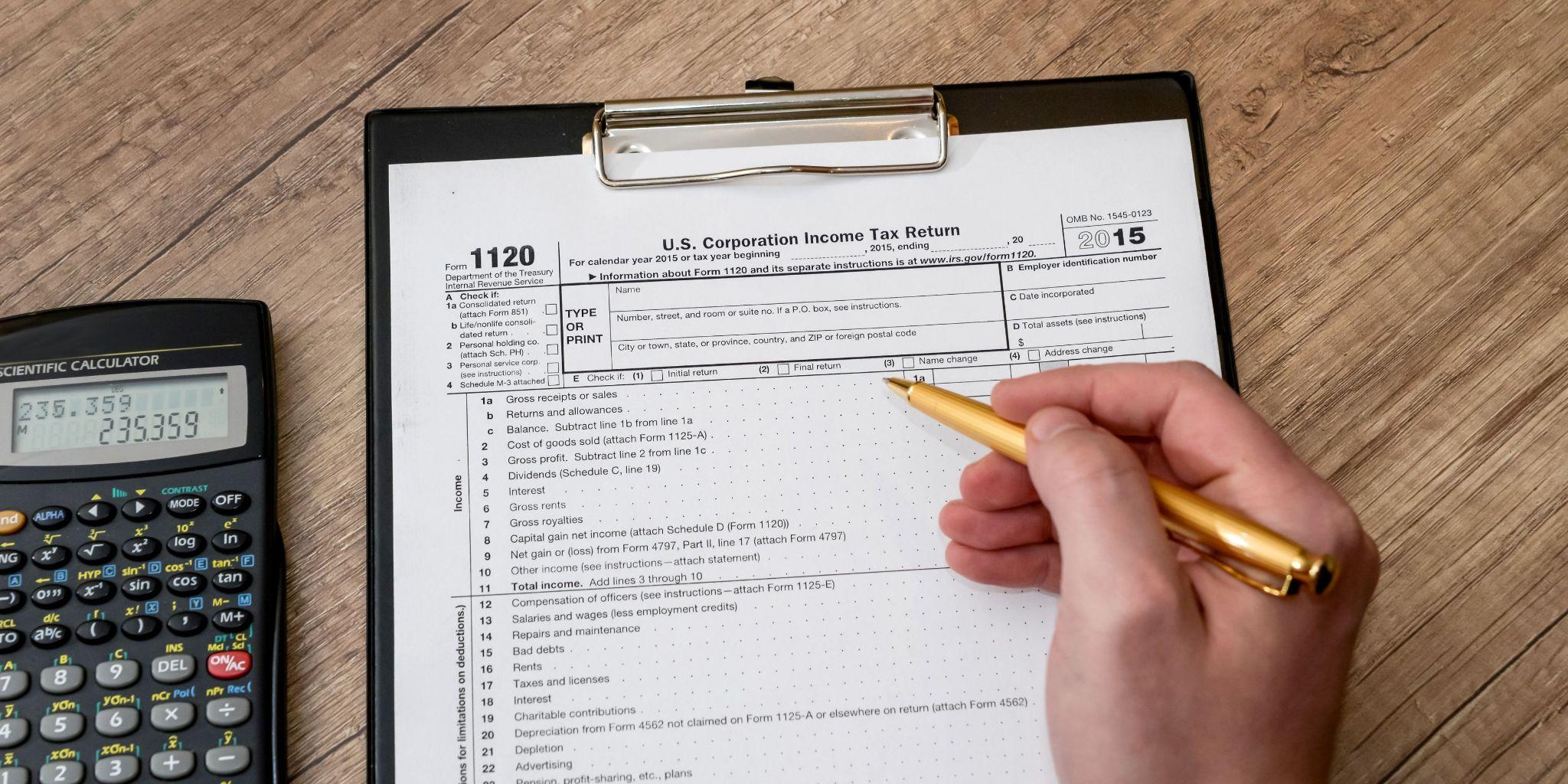
If you are specifically asking where to send Form 1120-S, always confirm the current addresses on the IRS “Where to file your taxes for Form 1120-S” page before mailing, because routing depends on your facts.
If the corporation’s principal business, office, or agency is located in California and Texas, the IRS address is-
Department of the Treasury,
Internal Revenue Service,
Ogden, UT 84201-0013.
Practical Filing Note
For businesses comparing options, e-filing is generally faster and reduces mailing risk, and the IRS instructions describe electronic filing availability.
This is especially relevant for tax filing for 1120-S corporations that also file multiple information returns, payroll returns, or other filings in the same calendar year.
Key Takeaways
- Definition: Form 1120-S is the federal return used to report S-corporation activity.
- Eligibility: You file only if your S-election (Form 2553) was accepted and remains active.
- Deadline: Typically due the 15th day of the 3rd month after year-end (calendar-year example: March 16, 2026).
- Submission: Many S-Corps can or must e-file, depending on filing volume and rules.
- Mailing: Paper filing addresses vary by state and asset size; use the IRS 1120-S “where to file” table.
Conclusion
Form 1120-S is not merely an obligatory filing, but a planning point of contact- it ties your bookkeeping, payroll, and shareholder reporting into a single justifiable narrative. To the extent that it is done in advance, it enhances documentation, less rework, and facilitates wiser year-long decisions. It is because tax planning for small business should not regard the 1120-S as an administrative task to be done at the last moment.
If you require assistance in aligning your books and filing strategy so that your 1120-S achieves the results of real planning, then GavTax Advisory Services can provide you with proper guidance about your next course of action.
FAQs
What is a Form 1120-S used for?
It is used to report the income, gains, losses, deductions, credits, and other information of an S corporation for a tax year covered by an S election.
Who needs to file Form 1120-S?
An entity must file if it elected S-Corp status by filing Form 2553, the IRS accepted it, and the election remains in effect.
How to file Form 1120-S if I need more time?
File Form 7004 by the regular due date to request an automatic extension of time to file.
Where do I file Form 1120-S if I am mailing it?
The IRS mailing address depends on your principal business location and, in some cases, total assets and whether Schedule M-3 is filed.
Where to send Form 1120-S for an S corporation in Texas?
For the states list that includes California, the IRS “Where to file” table directs paper filers to: Department of the Treasury, Internal Revenue Service, Ogden, UT 84201-0013.